Blog Hub

View industry insights, practical guides, and selected perspectives here to continuously obtain valuable content.

Home 博客中心

Blog

Blog

For semi-automatic chain loading and a fully automatic material warehouse, at exactly which step does batch pipe cutting differ?
Popular

For semi-automatic chain loading and a fully automatic material warehouse, at exactly which step does batch pipe cutting differ?

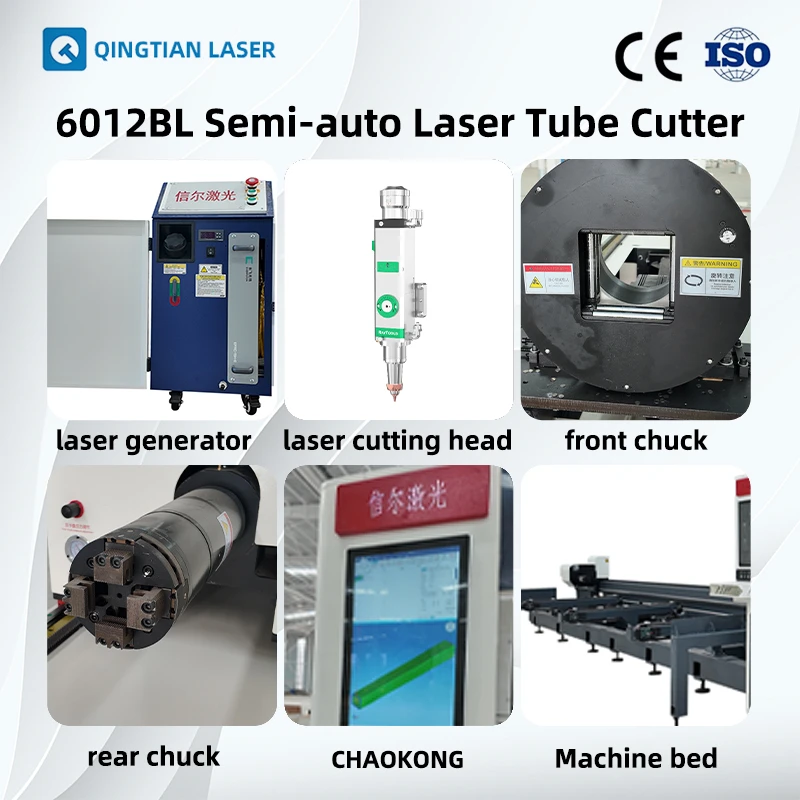
The gap between semi-automatic chain loading and a fully automatic material warehouse is concentrated in the manual involvement in the loading and unloading stages and in changeover adjustments, rather than in the laser cutting itself. Taking the QT-6012BL-3000W semi-automatic loading laser tube cutting machine as an example, this article provides a selection decision path based on batch size and changeover frequency, and lists the specifications, power supply, site, and maintenance conditions that must be verified before implementation.
Read Full Article →
For semi-automatic chain loading and a fully automatic material warehouse, at exactly which step does batch pipe cutting differ?
2026-11-06

For semi-automatic chain loading and a fully automatic material warehouse, at exactly which step does batch pipe cutting differ?

The gap between semi-automatic chain loading and a fully automatic material warehouse is concentrated in the manual involvement in the loading and unloading stages and in changeover adjustments, rather than in the laser cutting itself. Taking the QT-6012BL-3000W semi-automatic loading laser tube cutting machine as an example, this article provides a selection decision path based on batch size and changeover frequency, and lists the specifications, power supply, site, and maintenance conditions that must be verified before implementation.
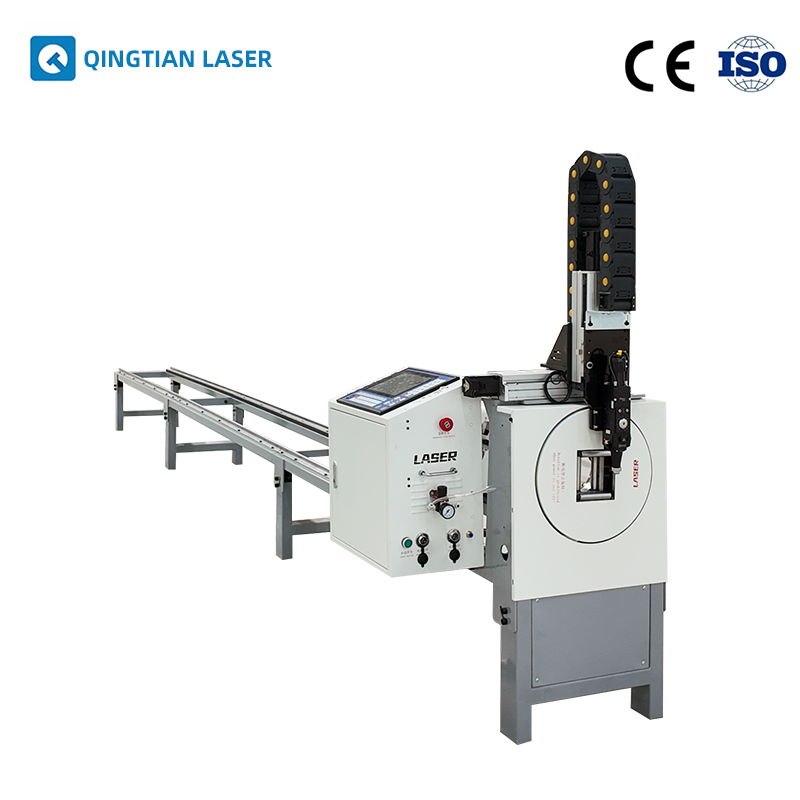
What is the difference between a pneumatic chuck and a manual chuck? The real impact of the clamping method of a small laser tube cutting machine on changeover efficiency
2026-11-05

What is the difference between a pneumatic chuck and a manual chuck? The real impact of the clamping method of a small laser tube cutting machine on changeover efficiency

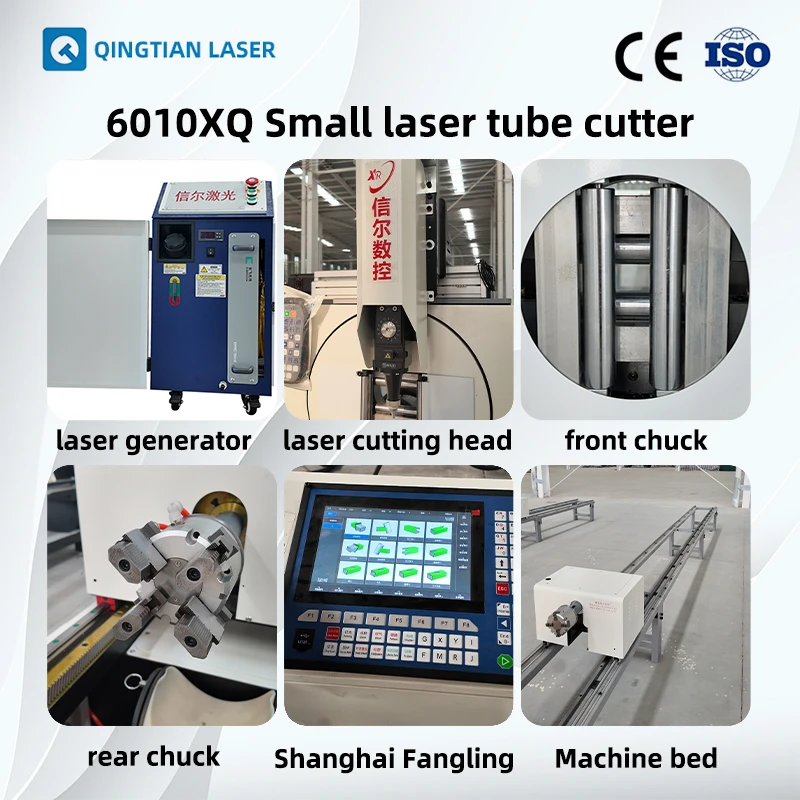
Compare pneumatic and manual chucks from the three dimensions of clamping action, changeover cycle time, and clamping force control for thin-walled tubes, explain the efficiency advantages and applicable boundaries of pneumatic chucks in frequent changeover scenarios, and, centered on the QT-6010XQ parameter range of square and round tubes 19–100 mm with thickness ≤3 mm, provide a selection judgment path and the information that needs to be confirmed before requesting a quotation.

If it is disassembled, moved to the construction site, and then reassembled, how can the accuracy of the QT-6010M be self-checked?
2026-11-04

If it is disassembled, moved to the construction site, and then reassembled, how can the accuracy of the QT-6010M be self-checked?

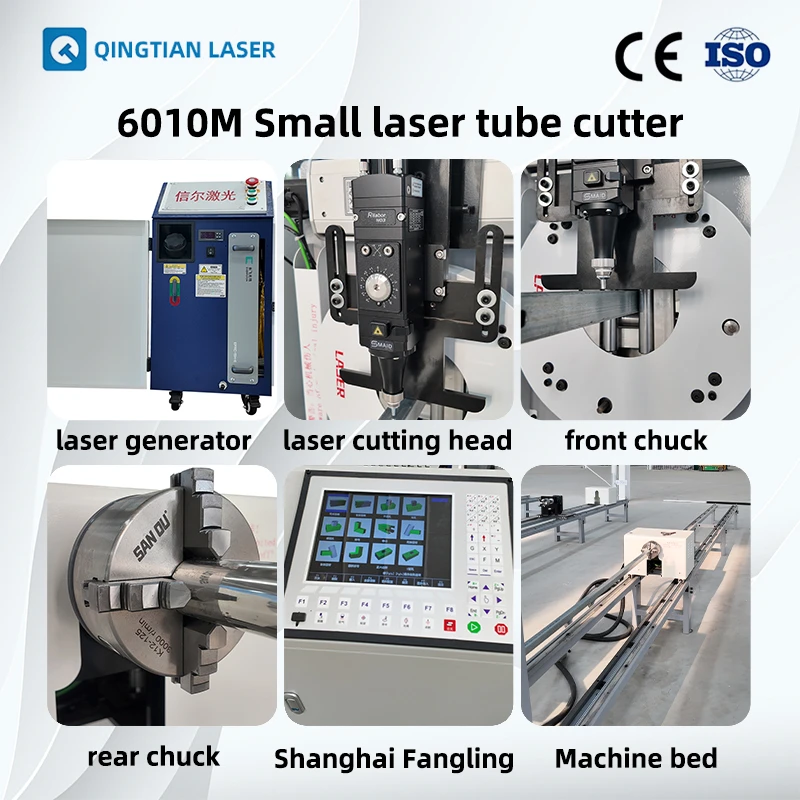
The QT-6010M square-round integrated portable small laser tube cutting machine adopts a three-section split design, which solves the problem of handling and site entry, but after each reassembly, an operable restart self-inspection process is required to confirm the current state. This article provides a four-step checklist from connector reset, visual and trial-cut verification of gripper coaxiality, to first-article release judgment, and explains which tube diameters and wall thicknesses and site conditions fall within the equipment's capability boundaries, helping tube processing, steel structure, and mechanical parts enterprises quickly restore stable production after relocation.

Mixed cutting of stainless steel, aluminum, and iron pipes: What should be noted when switching materials?
2026-10-02

Mixed cutting of stainless steel, aluminum, and iron pipes: What should be noted when switching materials?

For the common multi-material mixed-cutting needs of individual hardware processing businesses and small pipe processing factories, this article sorts out the switching logic, parameter confirmation path, and applicable scenario boundaries of mini economical fiber laser pipe cutting machines among steel, aluminum, stainless steel, and iron pipes, to help determine whether your order structure is suitable for adopting this machine.

Distributor's perspective: capability boundaries to confirm before recommending an entry-level fiber laser tube cutting machine to customers
2026-10-01

Distributor's perspective: capability boundaries to confirm before recommending an entry-level fiber laser tube cutting machine to customers

For individual hardware processing operators, small metal product factories, and pipe processing entrepreneurs, this article starts from actual processing scenarios and sorts out the applicable boundaries of mini economical fiber laser pipe cutting machines, the logic for judging power and cycle time, the signals for configuration customization trade-offs, and the key information that needs to be confirmed with the product provider before recommendation, helping you make a clear judgment during the model selection stage.

Impact of adjustment-free and maintenance-free operation on recruitment: can it be used without skilled laser operators?
2026-09-30

Impact of adjustment-free and maintenance-free operation on recruitment: can it be used without skilled laser operators?

Conclusion first: For two-dimensional cutting, hole-making, and truncation processing of small-diameter round tubes and square tubes, if there is no skilled laser operator, a mini economical fiber laser tube cutting machine can be used for most routine orders, provided that the tube material and thickness of the orders fall within the 0-10mm range, the cutting speed of 7000-8000mm/min matches the production takt time, and someone is arranged to complete installation, commissioning, and operation training. Its features such as adjustment-free and maintenance-free operation, simple operation, and support for multiple graphic formats can reduce dependence on skilled workers, but maintenance-free does not mean completely maintenance-free; routine cleaning and inspection are still necessary. This article, from the perspective of labor employment, breaks down the adaptation conditions, situations not recommended, and selection boundaries to help

Outsourcing or In-House Purchase: A Comparison of Two Paths for Small-Diameter Pipe Cutting
2026-09-29

Outsourcing or In-House Purchase: A Comparison of Two Paths for Small-Diameter Pipe Cutting

The core difference between outsourcing and self-purchasing lies not in the equipment price, but in who holds the execution rights for cutting and who bears the quality responsibility. This article breaks down the trade-off logic of the two paths from four dimensions: processing method, pipe material coverage range, applicable scenarios, and long-term ownership cost, to help individual hardware processing operators, small metal product factories, and pipe material processing entrepreneurs determine which path better suits their order structure.

Site and Power: What to Confirm Before Putting a Mini Pipe Cutting Machine into a Small Workshop
2026-09-28

Site and Power: What to Confirm Before Putting a Mini Pipe Cutting Machine into a Small Workshop

For a small workshop wanting to adopt a mini economical fiber laser tube cutting machine, what truly blocks implementation is usually not cutting capability, but rather site space, power, heat dissipation, and the boundaries of installation services. This article follows three lines—spatial dimensions to confirm before entry, power supply and liquid cooling conditions, and installation and training responsibilities—to provide an actionable checklist and decision logic, helping you clarify the conditions before finalizing the configuration.

Power and configuration customization: under what circumstances customization is needed, and how to determine it
2026-09-27

Power and configuration customization: under what circumstances customization is needed, and how to determine it

This article is intended for individual hardware processing operators, small metal product factories, and tube processing entrepreneurs, and focuses on the conventional configuration capability boundaries of mini economical fiber laser tube cutting machines. It focuses on explaining what 1500 watts, 0-10mm, and 4 axes each determine, which orders can be started directly, which signals indicate that power or configuration customization needs to be evaluated, and the scope, price increases, and delivery time issues that should be confirmed with Qingtian Zhizao before customization.

WhatsAppmailmail