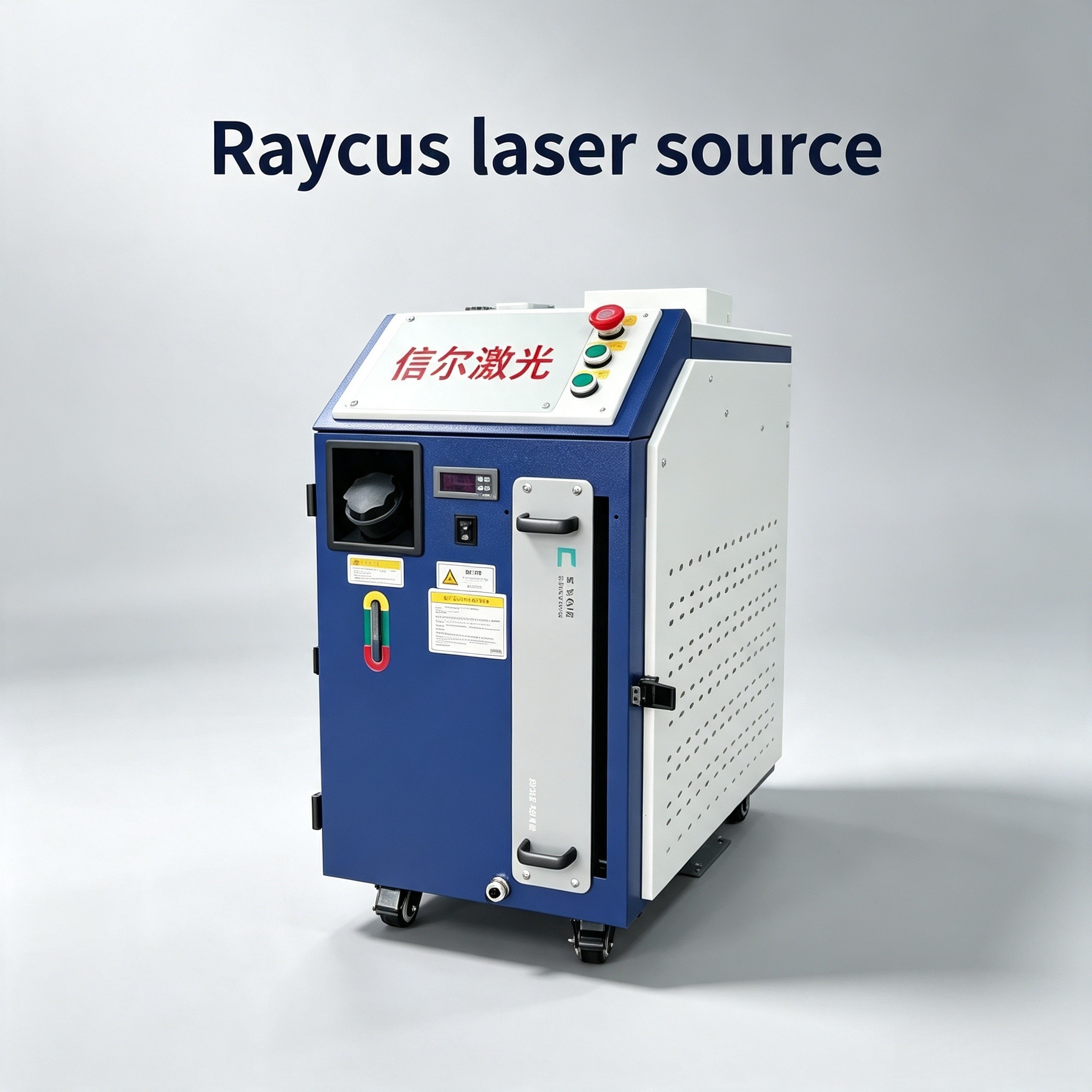
Why is it difficult to plan pipe cutting for advertising frames?First, take a clear look at the real working conditions with many specifications and many one-off custom pieces.
In the work of advertising frames, the hard part is not cutting one pipe, but that the pipes in every order are different. For door-shaped display stands, truss backgrounds, light box frames, and roll-up banner bases, customers often provide renderings and dimensions, and when they reach the workshop they become a pile of pipe parts with different cross-sections, different lengths, and different hole positions. This kind of working condition is completely different from guardrails and shelving, where "one specification is cut into several hundred pieces."
What are the typical characteristics of pipe cutting in advertising frame production?
Mixed specifications. In the same order, square pipes, round pipes, and flat pipes may appear at the same time, wall thicknesses range from thin-wall to regular wall thickness, and cross-sectional dimensions are also not uniform. Today we cut 20×20 square tubes, tomorrow we switch to 30×30, and the day after tomorrow another batch of round tubes is squeezed in.
There are many one-off custom pieces. Advertising frames are mostly made to on-site dimensions, so for the same specification of tube fittings, often only a few pieces or even just one piece is cut. After cutting this batch, the dimensions, hole positions, and angles of the next batch all change.
Delivery deadlines are tight, and the cost of rework is high. The customer is waiting to install. If the cut has large burrs, the length differs by a few millimeters, or the hole positions are off, it cannot be installed on site. Rework requires re-cutting, costing both time and material.
What requirements do many specifications and small batch sizes place on the cutting method?
Under these working conditions, the cutting method actually has to pass three tests:
- Changeover must be fast. If every change of specification requires re-adjusting the fixture, re-aligning the tool, and re-test cutting, most of the day is spent on preparation, and the actual pipe cutting becomes a minor part.
- Even a single piece must be cut accurately. Small batches mean there is no room for "cutting a few waste pieces first to get a feel."Length consistency, cut perpendicularity, and hole positions must meet standards from the very first piece.
- One person can handle multiple types of pipes. Small factories and individual operators usually do not have a dedicated person watching one machine; methods with a high operating threshold and frequent adjustments will directly eat into production capacity.
So what advertising frame cutting truly needs is not "cutting the fastest," but "changing fast, stable single pieces, and easy to learn." Traditional saws require manual measurement to switch angles and change lengths, abrasive wheel cutting leaves heavy burrs that need secondary processing, and plasma cutting produces rough cuts. In single-piece customization scenarios, the time spent on setup and finishing often exceeds the cutting itself.
This also explains why two-dimensional cutting, hole opening, and truncation of small-diameter round tubes and square tubes tend to be done with fiber laser tube cutting equipment—the adjustment-free and maintenance-free design reduces changeover steps, graphic files can be called directly, and switching between different specifications mainly involves changing the program rather than changing the machinery. As for whether your tube wall thickness, maximum part length, and average daily piece count fall within the suitable range of this type of equipment, that needs to be confirmed based on the specific order structure.
Suitable for first considering this approach: Tube specifications change frequently, single pieces and small batches are the main focus, you want one person to handle both cutting and simple hole opening, and site space and startup budget are limited.
Needs further consideration: If orders are long-term single-specification, ultra-large wall thickness, or large-diameter tubes, or if there are special process requirements for the cut section, then the logic of "flexibility first" may not be the optimal solution. You should first lay out the tube parameters and production capacity requirements before deciding.
What is a mini economical fiber laser tube cutting machine?How it handles flexible cutting of tubes in multiple specifications
It is a two-dimensional processing equipment that uses a fiber laser as the light source and is specifically designed for cutting small-diameter tubes. Unlike machines that cut sheet metal, its clamping and cutting head are designed around the "tube," enabling cutting, hole punching, and simple contour cutting of round and square tubes. For work such as advertising frame production, which involves "many specifications and many one-off custom pieces," its value lies not in how fast it cuts, but in the fact that switching to a different tube or a different hole position does not require making a new mold or changing tooling.
The basic working method and core configuration of this equipment
The tube is clamped on the chuck and rotates or is fed forward, while the laser head follows a programmed path along the tube wall, melting through where cutting is needed and piercing through where holes are needed. The whole machine is equipped with a 1500W fiber laser, suitable for metal tubes such as steel, aluminum, stainless steel, and iron, with a cutting thickness range of 0–10mm and a cutting speed in the range of 7000–8000mm/min. The laser head uses Raytools, cooling is liquid cooling, and it supports continuous wave mode for long-term operation.
When these configurations are combined, they point to a small-scale production rhythm of 'being able to work continuously without frequent downtime for light adjustment.'
The significance of the 4-axis configuration and Fangling control system for flexible cutting
4-axis means that in addition to pipe rotation and the cutting head moving along the length of the pipe, there are additional axes involved in posture adjustment. For pipes of multiple specifications, the practical impact is: when switching between round pipes and square pipes, the cutting head can adjust its angle and position according to changes in pipe shape, without needing to make a separate mechanical template for each pipe type. The Fangling control system is responsible for converting graphic files into cutting paths—supporting multiple graphic formats means that when you receive drawings from customers or frame hole-position drawings you have made yourself, you can import them and arrange the paths, without having to manually program every segment.
The specific significance for advertising frame production is that: the same batch of work may include pipe parts with different cross-sections and different hole spacings, and the combination of 4-axis and Fangling compresses the time spent on 'readjusting the machine every time a dimension is changed.' The more single-piece customization there is, the more obvious the savings in this changeover cost become.
What situations are suitable, and what situations need further confirmation
Suitable for: stainless steel round and square tube cutting, guardrail post blanking, metal furniture tube processing, advertising frame fabrication—the common points are that the tube diameter is not large, the work is mainly 2D cutting and hole drilling, and the batch size is small but the specifications are varied.
What needs to be confirmed with the team: whether the maximum cross-sectional size and wall thickness of the tubes you need to cut are within the equipment travel and the 0–10mm thickness range;whether the Fangling control system is directly compatible with the graphic formats you commonly use. These two points directly determine "whether it can cut your job," not "whether it cuts well."
1500W, 0-10mm, 7000-8000mm/min: what these parameters mean for advertising frame cutting
For the tubes commonly used in advertising frames, square tubes are mainly 20×20, 25×25, and 30×30, round tubes are mostly between Φ19 and Φ38, and wall thickness usually falls within 0.8–2.0mm, with a few load-bearing structural parts reaching 3mm. Comparing this set of actual specifications with the equipment parameters will make the judgment much clearer.
1500W covers 0-10mm, but what advertising frames actually use is the first third
1500W with a cutting thickness of 0-10mm, the upper limit of this range is not the daily working condition of advertising frames. The significance of the 0-10mm marking is that the equipment's capability covers the span from thin-walled tubes to medium-thick-walled tubes, while advertising frame orders almost all fall within the thin-walled range. When cutting 0.8–2.0mm stainless steel square tubes and round tubes, 1500W has ample margin, and neither cut quality nor speed needs to run at the limit.
What truly needs attention is tubing above 3mm. If thick-walled load-bearing columns occasionally appear in orders, 1500W can still cut them, but the speed will drop noticeably, the heat-affected zone will become larger, and the deformation problems that easily appear on thin-walled parts instead manifest on thick parts as dross and rough cut edges. So the criterion is not "whether it can cut 10mm," but "how high is the proportion of your orders that exceed 3mm."
If more than 90% are advertising frame tubes within 2mm, 1500W is a match;if thick-walled tubes regularly account for more than 30%, this machine's pace will be slowed down.
7000-8000mm/min corresponds to the fast cutting pace for thin-walled tubes.
The speed range of 7000-8000mm/min corresponds to the rapid cutting and hole punching of thin-walled tubes. Converted into production cycle time: for a 6-meter-long 25×25 square tube, cutting at this speed takes less than 1 minute of pure cutting time. Advertising frames often involve single-piece customization and varied specifications, so the real time consumption is often not in the cutting itself, but in tube changing, tool alignment, and program adjustment.
This speed level means that as long as the changeover process is streamlined, cutting dozens to hundreds of short tubes of different specifications per day is feasible.
But speed parameters cannot be viewed in isolation. 7000-8000mm/min is the performance under specific tube diameters, wall thicknesses, and materials. Cutting stainless steel versus iron, and thin walls versus 3mm thick walls, will show a gap in actual speed. If your orders are mainly thin-walled advertising frame tubes, this speed range is sufficient;If you frequently cut thick walls or have extremely high requirements for the cut end face, you will actually actively reduce the speed, and the cycle time should be estimated based on the situation after speed reduction.
Higher power is not always better; matching the order structure is what matters.
Higher power can cut thicker tubes and run at faster speeds, but the cost is increased equipment cost, floor space, and power configuration. For scenarios like advertising frames, which are mainly thin-walled small tubes with many one-off custom pieces, a 1500-watt margin is already sufficient, and the extra power budget cannot buy a proportional increase in output. Conversely, if thick-walled tubes and batch cutting account for a high proportion of orders, 1500 watts will become a bottleneck, and only then should higher power be considered.
To judge whether your orders fall within the capability range of this equipment, you can look at three ratios: the proportion of thin-walled tubes within 2mm, the ratio of one-off custom pieces to batch cutting, and the frequency of thick-walled tubes. Once these three ratios are clear, the answer to whether power and speed match will naturally emerge. Specifically for your combination of tube specifications, it is recommended to send the list of commonly used tube diameters, wall thicknesses, and materials to the QingTian team to confirm the actual cutting results and cycle time estimates.
Is this equipment suitable for making advertising frames?Recommended scenarios and boundaries where it is not recommended
The tubing used for advertising frames is usually concentrated in thin-walled stainless steel, aluminum square tubes, and round tubes. Specifications are changed frequently, and the quantity per batch is not large. This mini economical fiber laser tube cutting machine covers 2D cutting, hole opening, and cutting off of small-diameter round tubes and square tubes. With 1500W power and a cutting thickness of 0–10mm, it falls within the sufficient range for the thin-walled tubes commonly used in advertising frames. Changing drawings and specifications does not require changing molds, which fits the rhythm of “multiple specifications, small batches” quite well.
Which advertising frame processing scenarios are recommended for use
- Cutting square tube and round tube frames: Cutting to size, with a flat cut edge, eliminating the need for subsequent grinding.
- Tube hole opening: For the threading holes and connection holes of lightbox frames and signboard skeletons, cutting and hole drilling can be completed in a single setup.
- Single-piece or small-batch customization: It supports a relatively wide range of graphic formats, and changing the drawing changes the cut, making it suitable for scattered orders customized from customer drawings.
- Extended orders for guardrails and display racks: The process is similar to that for advertising frames, so these can be taken on as additional work to improve equipment utilization.
Situations where it is not recommended or requires careful evaluation
- Pipe diameter or wall thickness exceeds the small-diameter range: This machine is positioned for small-diameter round pipes and square pipes. Thick pipes and thick-walled pipes are outside its suitable range, so your maximum pipe diameter and wall thickness need to be confirmed first.
- Long-term single specification, large-volume cutting: If orders are highly concentrated on one specification, the value of changeover flexibility cannot be realized. Whether to buy your own equipment depends on whether the volume can continuously keep the equipment fed.
- Special requirements for cut end faces: If specific bevels or special-shaped 3D cutting are required, 2D cutting capability may not be enough. You need to explain the specific shape to the team before making a judgment.
- Large order fluctuations and unstable sources: Equipment is a fixed investment. If orders still rely on scattered outsourcing to piece together, it is safer to run outsourcing for a period first and get a clear picture of stable order volume before deciding.
To judge whether to buy your own equipment or continue outsourcing, focus on two points:Whether advertising frame orders have become stable enough to form a fixed production scheduleas well aswhether the frequency of specification switching is high enough that outsourcing communication costs noticeably slow down delivery。 If both hold true, the suitability of this equipment is relatively clear;If only one is met, it is recommended to first confirm your pipe diameter, wall thickness, daily output, and typical patterns with the team before deciding whether it matches.
Frequently Asked Questions
1. My advertising frame tubing has a wall thickness of only 1–2 mm. Can this equipment cut it? Applicable materials include steel, aluminum, stainless steel, and iron, with cutting thickness covering 0–10 mm, so thin-walled tubes are within range. For your specific combination of material and wall thickness, it is recommended to provide sample specifications to the team to confirm the cutting results.
2. Advertising frames often change dimensions—is it troublesome to switch specifications? The equipment supports multiple graphic formats; changing the cut is as simple as changing the image, with no need to change molds like traditional punching and shearing. This is exactly what makes it suitable for one-off customization.
3. If order volumes are not large, will buying this machine leave it idle? If the advertising frame business only takes occasional orders and volumes are unstable, the risk of idle time does exist. You can first include similar tube processing such as guardrails and metal furniture to increase machine utilization, then evaluate whether it is worth purchasing your own.
4. Is installation and operation difficult? Can I handle it alone? The equipment is adjustment-free and maintenance-free, equipped with a liquid cooling system, and can run continuously. Whether installation, commissioning, and operation training are provided, as well as the laser lifespan and maintenance costs, it is recommended to confirm directly with the team.
Learn more
If the advertising frame orders have already formed a fixed production schedule, and specification changes are so frequent that outsourcing communication noticeably slows down delivery, this mini economical fiber laser tube cutting machine is worth considering.Send the list of commonly used tube diameters, wall thicknesses, materials, and typical patterns to the Qingtian Zhizao team, and we can help confirm the cutting results and cycle time estimates based on that, helping you determine whether it is a match.